Wladimir Pazmiño
Portfolio›Case studies›Pronaca›TQMA magazine

TQMA magazine and Su Tienda: the company as its own publisher.

A household receives a cooking magazine, and a shopkeeper receives a trade magazine — eighteen issues a year, both from the food company they already buy from, on paper and pixels the company owns. I ran both titles at Pronaca, for two audiences with nothing in common.

Titles
2 — consumer and trade
Issues
18 a year
Combined investment
$6X K a year
Decision
Buy attention or earn it
Owned publishingEditorial directionTrade mediaContent pillarsPhotography
Abstract

Eighteen issues a year across two audiences with nothing in common: households who cook, and shopkeepers who stock. The unfashionable half is the interesting one — a print trade title reaching nine thousand shopkeepers, in a market where a large share of the volume moves through their shelves.

The tension

Advertise into the audience, or publish for it.

Option A

Buy the reach

Media placement, priced per campaign, re-bought every quarter. Predictable and permanently rented.

VS
Option B

Own the title

An editorial operation with a fixed cost, a monthly obligation and an audience that does not disappear when the flight ends.

The decision

Publish — and keep the trade title nobody would defend.

Su Tienda is the line most marketers cut first: print, unglamorous, B2B. In a market where protein moves through neighbourhood shops, reaching nine thousand shopkeepers is not nostalgia. It is distribution.

The two titles

One operation serves two different readers.

Title Audience Issues a year Reach
TQMA Consumers — households who cook 12 250,000 readers
Su Tienda Trade — neighbourhood shopkeepers 6 54,000 shopkeepers

Combined investment in the two titles: $6X K a year — for eighteen issues and a reach the company never has to re-buy.

Reach by title, per issue
TQMA · consumer250,000 readersSu Tienda · trade54,000 shopkeepers
Twelve consumer issues and six trade issues a year, on a combined $6X K — reach the company never has to re-buy.
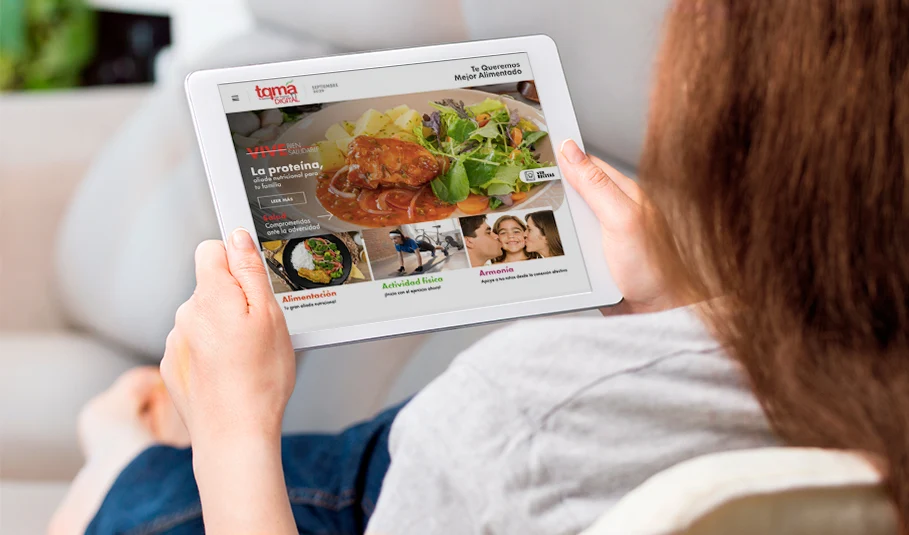
TQMA digital magazine on a tablet, with the three content pillars along the foot of the cover: Alimentación, Actividad física and Armonía.
The cover carries the three pillars in order — Alimentación · Actividad física · Armonía. The concept was not on a slide; it was the table of contents.
Why the trade title is the interesting one

Nine thousand shopkeepers read on paper.

Su Tienda is the title most marketers would cut first — print, unglamorous, a B2B audience. In a market where a large share of protein moves through neighbourhood shops, it is not nostalgia. It is distribution.

Consumer

Recipes and wellbeing

The pillar structure gave the editorial team a brief every month instead of a blank page: nutrition, movement, family harmony.

Trade

The shopkeeper's business

Content aimed at the person deciding what to stock — the audience whose shelf decisions the brand depends on and almost nobody talks to.

Production

Photography direction

Food photography supervised in-house, including the production of the printed cookbook Magia en tu Cocina. It is directed, not ordered.

Reuse

One library, many outputs

The same recipe system fed magazine, site, app and social — which is why eighteen issues a year was possible at all.

What it changed

Publishing is how a brand earns the right to be in the house.

Advertising asks for attention. A magazine somebody keeps in the kitchen is given attention, monthly, for years. The economics are not comparable: $6X K a year against what the equivalent reach would cost in bought media.

It also changed the internal conversation. Once the company was a publisher, the question in the room stopped being 'what should the campaign say' and became 'what is worth publishing' — which is a much harder and much better question.

In your company

What this looks like when you bring it in.

What you get

An editorial calendar for your two audiences

Consumers and trade, each with content made for them.

What builds up

Publishing your company owns outright

Print and digital titles that carry every brand.

What you stop paying for

Reach rented from other publishers

Your own titles, your own audience.

Keep going