The brand today
SleepCloud is live for its first Christmas season.
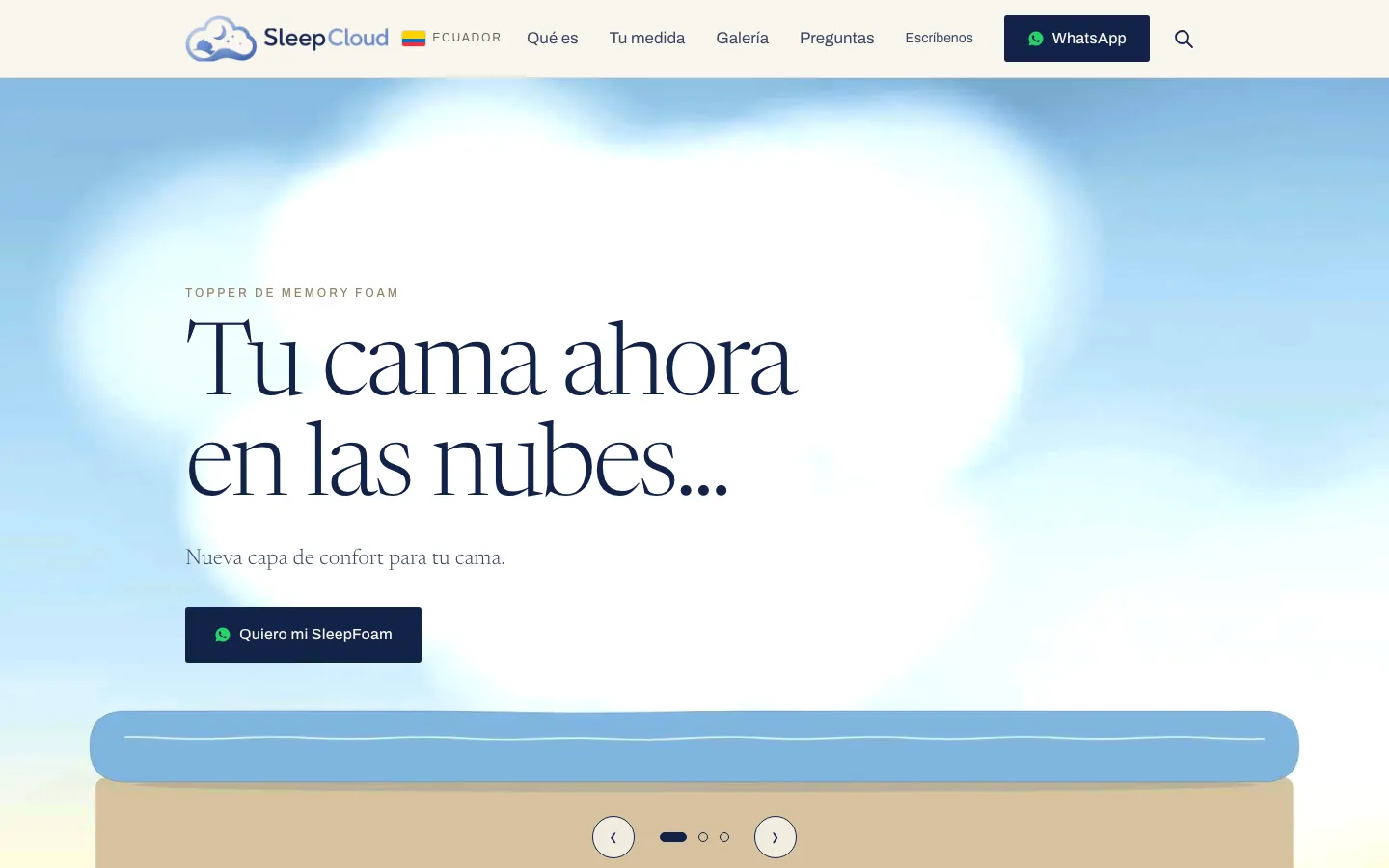
Memory foam toppers were the bet of an importer with a decade of sourcing in China, in a country where few households own one. As partner at More is More I led the business case. Phase one produced the evidence to place the order. Phase two built the brand and the sales channel to launch it.
Ecuadorians know memory foam from mattresses and pillows. Toppers are removable layers that upgrade the bed you already own, and very few stores carry them. Before paying for a container, the client needed three things: evidence that the category could be built here, a price people would accept, and a landed cost that left a margin at that price.
Brands already selling toppers and mattresses in Quito and Guayaquil, mapped with their prices by size and their sales channels.
Survey and in-depth interviews in both cities. Waking up during the night came out as the main complaint, ahead of back pain.
Read from consumers, with a ceiling above which buyers would rather replace the mattress.
Tariff heading, duties and freight per size, so the client saw the margin of every unit before closing with a factory.
Three candidate names tested in the interviews. SleepCloud was the clear favourite, and people understood it without speaking English.
Interviewees responded to comfort and pushed back on medical claims. SleepCloud's positioning takes that literally: a cloud on top of your current mattress.
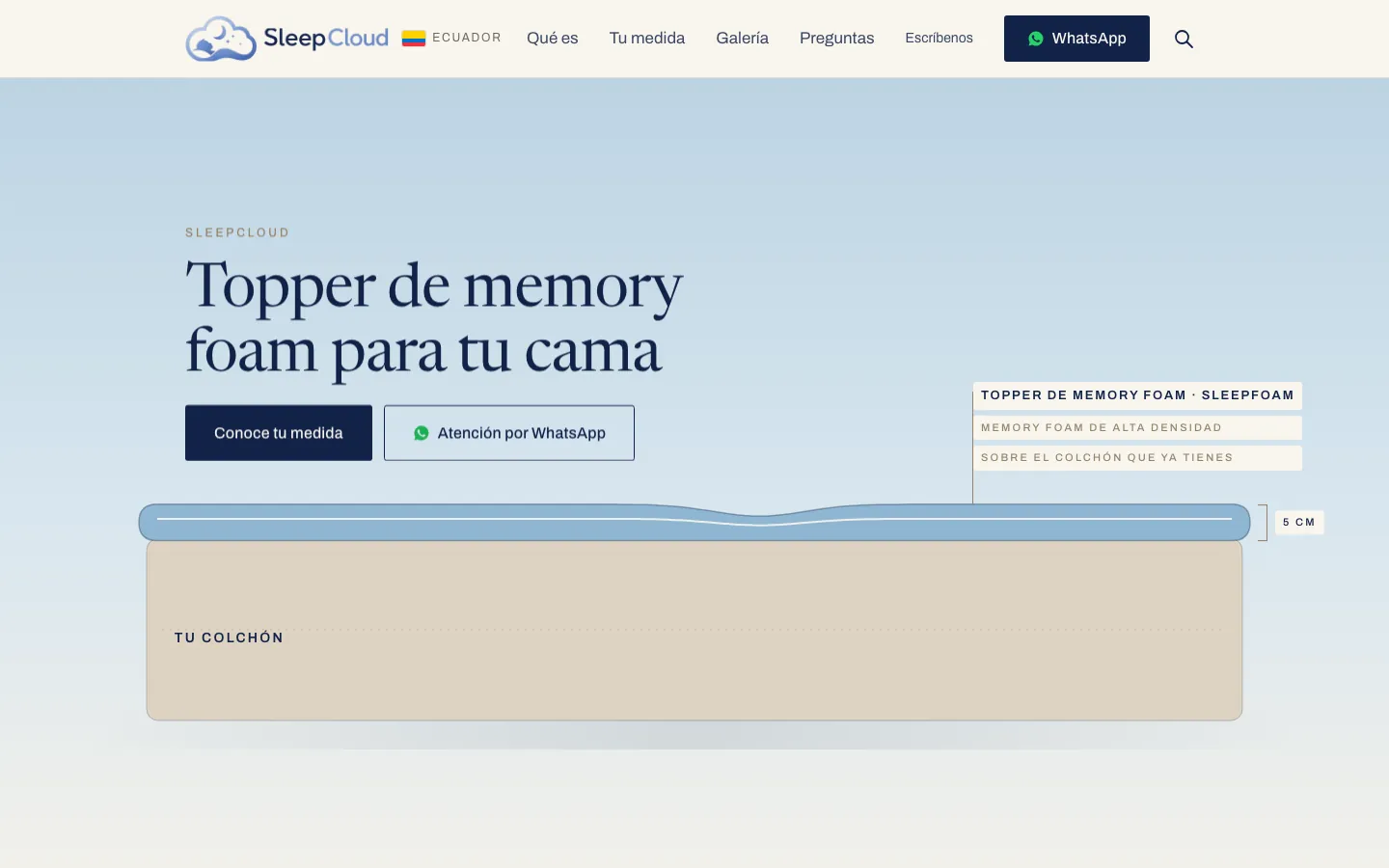
Selling the topper as an addition to the mattress keeps the price inside the band buyers accept.
Classic white foam makes up most of the order, with a cooling-gel version for the hot coast.
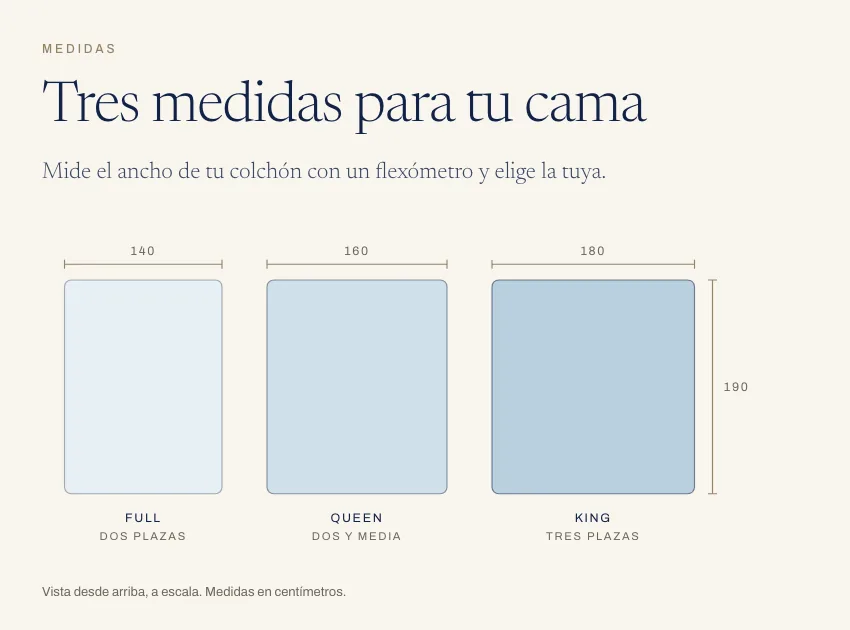
Full 140, Queen 160 and King 180 cm, all 190 cm long, named the way Ecuadorians name beds.
Size selector with beds drawn to scale, a page per size, a gallery and answers to common questions.
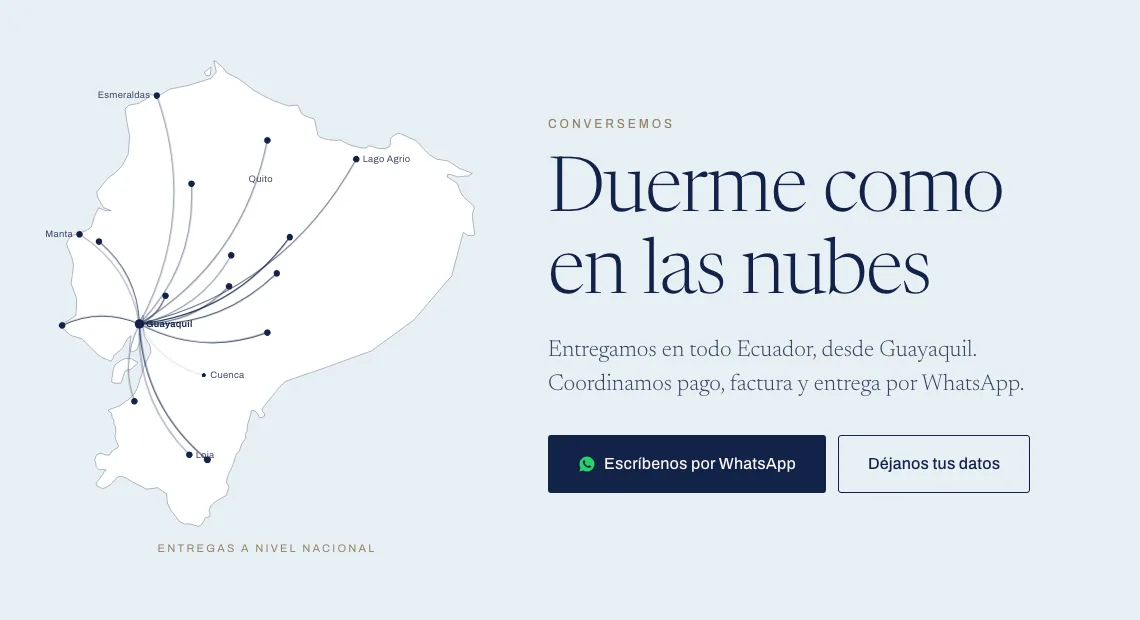
Every button opens a conversation, where payment, invoice and delivery are agreed.
Shipping from Guayaquil to every province, drawn on the site's map.
Texts change with a click through Oli-canvita, the editor More is More builds.
Box for the compressed, rolled topper, with dimensions ready for the printer.
Social accounts, Meta pixel and GA4, feeding a CRM funnel with WhatsApp follow-up.
Single page that collects WhatsApp numbers and emails, with no price yet.
Product, sizes and warranty online, building demand while the order travels.
Price, stock and delivery go live with the container, aimed at the Christmas season.
October 2026: brand, website and sales channel are live. Sale opens when the first container reaches Guayaquil. First-season figures will be added here once they exist: leads, cost per lead and units sold.
Market evidence on the table before the first purchase order.
Brand and sales channel in place before the stock arrives.
Stock ordered before anyone checked what customers will pay.